

Why Research Facilities Need Annual Microscope Preventative Maintenance and How Blais Can Help

A microscope can look fine from the outside and still produce unreliable results. A slightly loose stage, dirty optics, aging grease, misaligned illumination, or subtle focusing drift can affect the quality of images and the confidence of an entire research workflow.
For research facilities, microscopes are not just lab equipment. They are daily-use instruments that support observation, measurement, imaging, training, documentation, and repeatable scientific work. When they fall out of adjustment, the impact spreads quickly.
Annual preventative maintenance keeps microscopes clean, calibrated, and ready for use before small problems become expensive failures. Blais Microscope Company helps research teams protect their equipment, reduce downtime, and maintain the level of performance their work depends on.

Microscopes lose performance gradually
Most microscope issues do not appear all at once. They develop slowly through normal use.
A researcher may compensate for a stiff focus knob without thinking about it. A student may adjust illumination more than usual because the image looks dim. A lab manager may notice that one microscope is avoided because it feels “off,” even though no one has filed a repair request.
Common signs of microscope wear include:
Reduced image clarity
Dust, oil residue, or contamination on optical surfaces can soften an image and reduce contrast.
Uneven illumination
Misaligned light paths, aging bulbs, LED issues, or condenser problems can make images harder to interpret.
Mechanical stiffness
Stages, focus mechanisms, nosepieces, and controls can become stiff or uneven over time.
Focus drift
A microscope that cannot hold focus can slow imaging and create frustration during long sessions.
Inaccurate movement or positioning
Mechanical stage wear can make it harder to scan slides smoothly or return to a specific field of view.
By the time these issues are obvious, the microscope may already be affecting productivity. Annual service helps catch them earlier.
Preventative maintenance protects research quality
Research facilities rely on consistency. If one microscope produces a clear, evenly lit image and another produces a dim or distorted one, the workflow becomes less predictable. That matters in shared labs, core facilities, teaching environments, quality control areas, and specialized research spaces.
Annual service supports consistency by keeping instruments in known, working condition. It also helps reduce variation caused by equipment condition rather than the sample itself.
A well-maintained microscope can support:
Clearer observation and imaging
More repeatable viewing conditions
Smoother movement and focusing
Better user confidence
Fewer interruptions during scheduled work
Longer useful life for costly equipment
This is why many facilities choose to Schedule Annual Microscope Preventative Maintenance as part of their regular lab operations, much like they service incubators, centrifuges, pipettes, and other essential instruments.
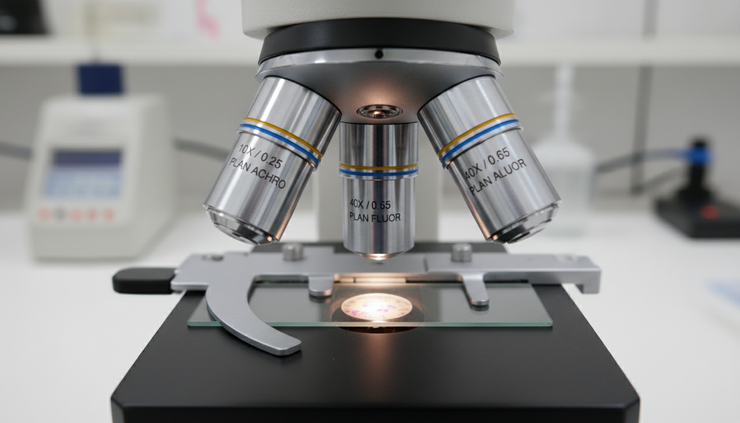
Annual service can help reduce costly downtime
Microscope downtime is rarely convenient. A failed instrument can delay experiments, interrupt imaging schedules, create bottlenecks in shared spaces, or force teams to move work to another unit that may not match the same configuration.
Preventative maintenance cannot prevent every future repair, but it can reduce the risk of avoidable failures. During a service visit, a trained technician can identify wear, contamination, loose components, or alignment problems before they become more serious.
That gives a facility time to plan. A microscope that needs attention can be serviced before a major project begins, before a training session, or before a busy imaging period.
The difference is simple: planned maintenance is easier to manage than an unexpected breakdown.
What annual microscope preventative maintenance usually includes
The exact service depends on the microscope type, model, condition, and use. A basic inspection for a teaching microscope will differ from care for a research-grade fluorescence, phase contrast, stereo, or inverted microscope.
Still, a thorough preventative maintenance visit often focuses on several core areas.
Maintenance area | Why it matters |
Optical cleaning | Helps restore image clarity, contrast, and brightness |
Mechanical inspection | Finds wear, stiffness, looseness, and stage movement issues |
Focus system check | Supports smooth, stable focusing during use |
Illumination check | Helps maintain even, reliable light output |
Alignment review | Keeps optical components working together as intended |
Function testing | Confirms that the microscope performs properly after service |
This kind of work requires care. Microscope optics are delicate, and improper cleaning can scratch coatings or push contaminants into sensitive areas. Experienced maintenance matters because the goal is not only to clean the instrument, but to preserve it.

Why research facilities should not wait for visible problems
A microscope can still function while delivering less than ideal performance. That is the risk.
If a user sees an unclear image, they may assume the sample is poor. If the field is uneven, they may spend extra time adjusting settings. If focusing is inconsistent, they may repeat imaging or avoid that microscope altogether.
These small inefficiencies add up. In a busy research facility, even minor equipment issues can waste time across many users.
Waiting for visible failure also increases the chance that a simple maintenance issue becomes a larger repair. Dried lubricant, neglected mechanical strain, or repeated use with a loose component can cause more wear than necessary.
A scheduled annual maintenance plan creates a better rhythm. It keeps microscope care from depending on whether someone notices a problem, remembers to report it, and has time to follow up.
How Blais Microscope Company can help
Blais Microscope Company supports facilities that need dependable microscope service without disrupting the lab more than necessary. The value is practical: trained attention, careful handling, and a service approach built around keeping microscopes usable and reliable.
Blais can help by:
Inspecting instruments carefully
A technician can check optical, mechanical, and illumination systems for common problems and early warning signs.
Cleaning microscopes properly
Correct cleaning technique helps protect lenses, coatings, filters, and other sensitive parts.
Addressing small issues early
Minor adjustments and maintenance can improve daily performance and reduce user complaints.
Helping facilities plan service
Annual scheduling makes it easier to maintain multiple microscopes across research labs, teaching rooms, and shared instrument areas.
Supporting a range of lab environments
Research facilities often have different microscope types in one building. A maintenance provider familiar with microscope systems can help keep that mixed inventory in better condition.
For facilities with many users, annual maintenance also improves accountability. Each instrument gets attention on a predictable schedule instead of waiting until a busy researcher reports a problem.
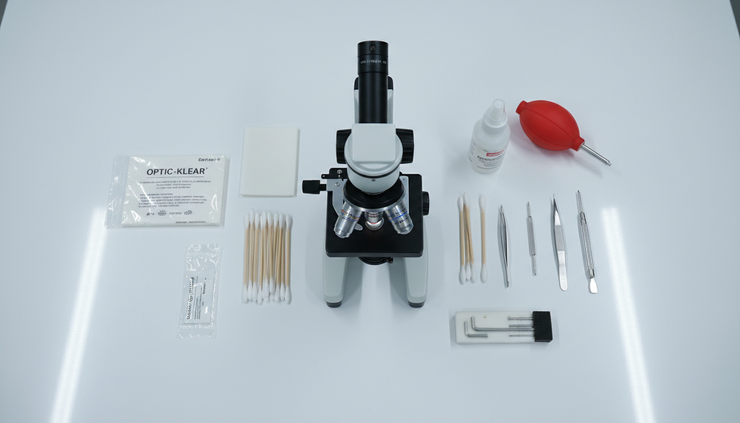
A simple maintenance schedule makes microscope care easier
Annual preventative maintenance works best when it becomes routine. Facilities can keep a basic inventory of microscopes, note high-use instruments, and schedule service at a time that causes the least disruption.
A simple internal plan may include:
Listing each microscope by location and type
Tracking known issues or user complaints
Prioritizing high-use or research-critical systems
Scheduling annual service before peak lab periods
Keeping service notes with equipment records
This does not need to be complicated. The goal is to make microscope care predictable.
For many labs, one annual visit is a strong baseline. Heavily used microscopes, specialized imaging systems, or instruments in demanding environments may need more frequent attention. Blais can help evaluate what makes sense based on usage and condition.
Better maintenance supports better science
Research depends on trust in the tools. A microscope that is clean, aligned, and mechanically sound helps users focus on the sample, not the instrument.
Annual microscope preventative maintenance protects image quality, reduces avoidable downtime, and extends the useful life of valuable equipment. It also gives facility managers a clear way to stay ahead of repairs instead of reacting to problems under pressure.
Blais Microscope Company can help research facilities keep microscopes ready for the work that matters. A planned annual service schedule is a small step that can prevent larger disruptions, protect equipment investment, and support more reliable results year after year.


Comments